Gladiator sequel script
Hem / Kultur, Media & Underhållning / Gladiator sequel script
He penned the script for the 2005 film The Proposition, as well as 2012’s Lawless. Religion has been a recurring theme in Cave’s music throughout his career, as is his morbid fascination with death and the darker side of the human psyche. The original Gladiator, Ridley Scott’s tribute to Ancient Rome that single-handedly revived the sword-and-sandal genre, was a great film, but it also worked as a standalone experience without the need for future entries.
So, while Gladiator 2 may not have necessarily been in the cards for Cave, he has certainly found success elsewhere. But these scenes also bring back some of the characters and political intrigue from Gladiator. After focusing on the real-world side of Ancient Rome in the original, it would make sense to change direction and explore another component of this fascinating period of human civilization.
'Gladiator II' Wouldn't Have Been a Predictable Legacy Sequel
Gladiator had already sown the seeds with its occasional dreamlike sequence in the golden wheat fields of Elysium, and given that Juda’s final line implies that he and Maximus will see each other again despite the latter’s death, it’s not too much of a stretch to imagine the filmmakers dipping their toes into the more mythical side of this culture.
As well as meeting his now-adult son, Maximus bumps into his old sidekick Juba (who was played in the original film by Djimon Hounsou). Another chat with the Roman Gods? Scott and Scarpa’s movie gives audiences what they enthused about from the first movie, however: Colosseum battles and plenty of them, with the first one taking place within the film’s opening hour, followed by several more.
By comparison, Cave’s script takes 81 minutes to get to the arena, and then only for one brief scene.
But there were even deeper issues than that of predictability.
As previously mentioned, Cave’s inclusion of Christ made some sense historically, but apart from Maximus’ resurrection would have been jarring, it really risked jumping the shark in a few more ways. Cave's script found a way to bring Maximus back and still have him be at the heart of the story, but it was not received well, and did not move forward with further development.
Gladiator 2's Original Script Was Not Rooted In Real History
It Was a Mythological Fantasy
Instead of being rooted in the real history of Ancient Rome, Cave's Gladiator 2 script was more of a mythological and fantastical story.
(Maximus has always been a killing machine, and making him undead doesn’t change that.)
While Scott’s sequel climaxes in a rousing Lucius speech that stops a war before it can start and restores peace to Rome, Cave chose to end his script in mass bloodshed. A family reunion in sunny Elysium? Indeed, it may have been best that this picture remained unmade.
The film follows Maximus (Russell Crowe), a legatus forced into becoming a slave after he is betrayed by Commodus (Joaquin Phoenix), a power-hungry emperor responsible for the deaths of Maximus’s wife and child. The premise hinged on mythological deities resurrecting Maximus from the afterlife to protect their own omnipotence.
Gladiator 2: The strangest sequel never made?
At this stage, the script focuses on a band of early Christians dodging the Roman authorities, just as they did in the recent Mary Magdalene biopic which co-starred Phoenix. Unsurprisingly Cave’s script was rejected, but once the initial “what the hell” reaction had subsided, a feeling began to emerge that what Cave was trying to accomplish was not quite as absurd as first appeared… even if initial impressions made it feel a million miles away from what made the first film such a success.
When Would 'Gladiator II' Take Place?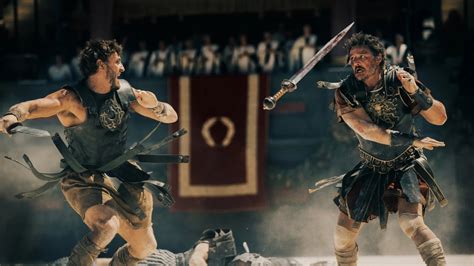
Scott brought the powerhouse filmmaker on as a consultant and greatly valued the input he received. “That’s where it all went wrong,” Cave told Maron, recalling a blunt conversation that apparently went like this:
Nick Cave: “Hey, Russell, didn’t you die in Gladiator 1?“
Russell Crowe: “Yeah, you sort that out.”
So Cave did… sort of.
Crowe’s reaction, according to Cave, was simple: “Don’t like it, mate.”
Cave wasn’t too bothered. But beneath that dream, Scott’s story still accepts that violence (both in and out of the Colosseum) is integral to any sort of change in the face of imperial power.
Then again, maybe we’re giving Gladiator 2: Christ Killer a smidge too much credit.